Stripe Radar: Machine Learning vs. Radar for Fraud Teams – What's the Difference?

Stripe Radar: Machine Learning vs. Radar for Fraud Teams – What's the Difference?
Stripe offers two distinct fraud prevention solutions with different pricing models. This comparison helps businesses determine which option aligns with their needs.
Stripe Radar's Machine Learning
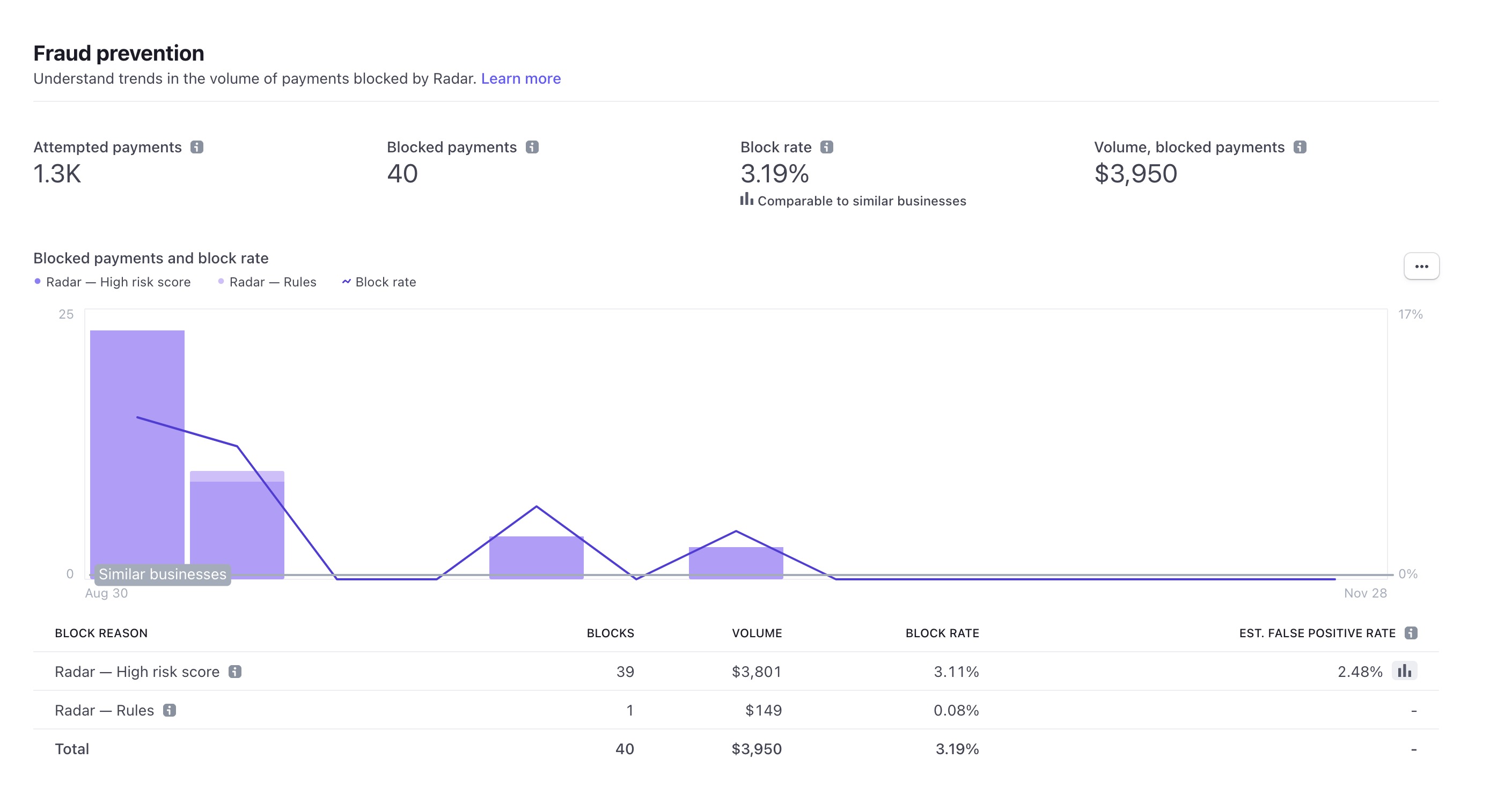
Stripe's automated fraud detection operates as a built-in component that analyzes transaction patterns using advanced algorithms without requiring manual intervention.
Key Features:
-
Dynamic Fraud Detection: The system continuously updates using data from millions of Stripe businesses to identify suspicious activity patterns with precision.
-
Automatic Updates: The platform adapts to emerging fraud trends, protecting businesses against new threats without requiring action from users.
-
Scalability: The automated system grows with your business, whether handling dozens or millions of transactions.
Radar for Fraud Teams
This enhanced offering provides additional tools layered on top of the foundational machine learning protection, designed for businesses needing a more hands-on fraud management approach.
Key Features:
-
Custom Rules: Fraud teams can establish detection rules based on their specific business knowledge and acceptable risk levels.
-
Review Interface: A specialized dashboard enables teams to evaluate and respond to flagged transactions efficiently.
-
Rich Insights: The system provides supplementary data points and machine learning analysis to guide decision-making.
Stripe Radar Fee Comparison
| Stripe Service | Fee Structure | Features Included | |---|---|---| | Stripe Radar's Machine Learning | Integrated with Stripe payments at no additional cost | Automated fraud detection, Machine learning, Basic rule sets | | Radar for Fraud Teams | $0.02 USD per screened transaction | All machine learning features, Custom rule sets, Review interface, Advanced insights | | Chargeback Protection (add-on) | 0.4% per transaction | No dispute fee, no evidence submission required |
Note: Pricing may change; verify current rates at Stripe Radar pricing.
Key Takeaways
-
Smaller businesses with straightforward transactions may find automated machine learning sufficient.
-
Organizations handling higher transaction volumes or facing specific fraud challenges benefit from additional customization and oversight features.
-
Although Radar for Fraud Teams involves costs, it can offset expenses through reduced chargebacks and improved detection effectiveness.
Conclusion
The decision between these solutions depends on individual business requirements. Both provide robust fraud-fighting capabilities, though the premium option offers greater customization.
Consider adding complementary tools like ByeDispute to your fraud prevention strategy—it detects duplicate charges, validates customer emails, and identifies compromised credit cards.